
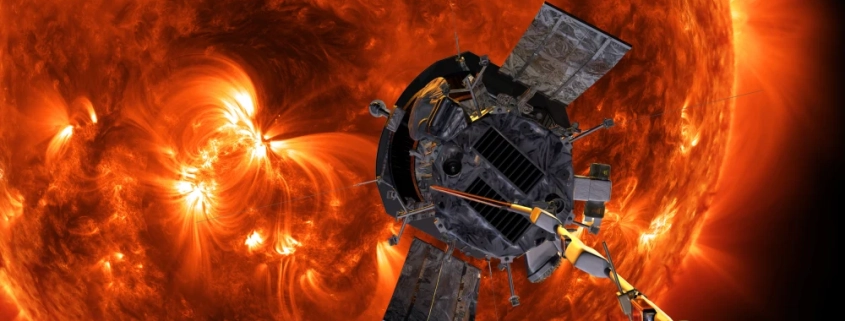
NASA’s Solar Probe Closer to Sun than Ever
NBC News reported that the Parker Solar Probe recently made a fiery dive close to the sun’s surface. Still 3.86 million miles away from the sun, the spacecraft, the size of a small car flies at about 430,000 MPH. Read More
The Urantia Book includes information about the nucleus of the physical system to which our sun and its associated planets belong as the center of the onetime Andronover nebula. Our sun is 6 billion years old, and we can be assured that our sun is stable and reliable – for the next twenty-five billion years!
“Your own sun has long since attained relative equilibrium between its expansion and contraction cycles, those disturbances which produce the gigantic pulsations of many of the younger stars. Your sun is now passing out of its six billionth year. At the present time it is functioning through the period of greatest economy. It will shine on as of present efficiency for more than twenty-five billion years. It will probably experience a partially efficient period of decline as long as the combined periods of its youth and stabilized function.” Read More