



Divinely Real
Worship is a personal communion with that which is divinely real, with that which is the very source of reality.
The Urantia Book, (196:3.22)

Spiritual growth is mutually stimulated by intimate association with other religionists. Read About it HERE

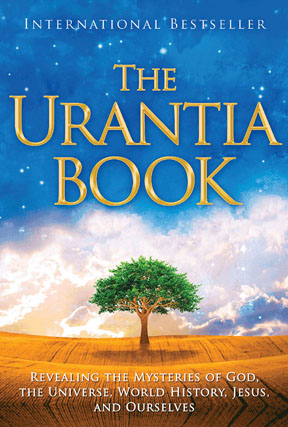
What Is The Urantia Book?
The Urantia Book includes the origin, history, and destiny of humanity. It answers questions about God, life in the inhabited universe, science, astronomy, the history and future of this world, Adam and Eve, and it includes an uplifting and greatly expanded narrative of the life and teachings of Jesus. This narrative of Jesus’ life is sourced from spiritual beings who were present during Jesus’ life and who have preserved these records for presentation in The Urantia Book and in our modern times.
The Urantia Book describes an endless destiny for humankind, teaching that living faith is the key to personal spiritual progress and eternal survival as an immortal being.
 Urantia (pronounced: you ran chah) is the universe name for Earth. The word Urantia translates to “your place in the universe.” Urantia is the sentimental shrine of all Nebadon (the name of our universe). Urantia is but one planet of ten million inhabitable worlds and is the mortal home of Christ Michael (Jesus of Nazareth), sovereign creator and ruler of all we see.Read More.
Urantia Book Teachings
Is there only one true religion?
There are many, many religions which are active on Urantia. Many of them claim to be the “only one true religion,” but that would not make much sense, would it? They cannot all be the only true religion, but even so, all have their value. Read More



How I Pray
For Gard Jameson, a philosophy professor at UNLV, prayer is a four level, dimensional experience. Learn why and discover how The Urantia Book can help you also learn how to pray.
Watch the Full Video
Read Book Reviews:
Rings True
Reviewed in the United States on July 13, 2022
“Are you disillusioned with the teachings of religious denominations? Do you believe in Angels and other beings of light and love that are here to serve the evolution of humans? Then this is the revelation you seek.”
Read More Reviews and Buy the Book
Did Jesus Establish a Church?
Jesus did not incarnate in order to establish a church, and he did not counsel his disciples to establish churches. His mission was to proclaim the establishment of the Kingdom of God in the hearts of mankind, and to free mankind from the bondage of churches of authority.…Read more…



Is Humanity a Passing Phase in Evolution of Intelligence & Civilization?
/in Trending Now!Oxford University Press recently suggested that In light of the recent spectacular developments in artificial intelligence (AI), questions are now being asked about whether AI could present a danger to humanity. Is humanity a passing phase in the evolution of intelligence and civilization? Read More
The Urantia Book assures us that no matter what may happen in the future with AI, the evolution of the human race will continue. If AI someday makes it impossible for the human race to continue to live here, we will be taken somewhere else, where we CAN live and continue. “If some physical catastrophe should doom the planetary residence of an evolving race, the Melchizedeks and the Life Carriers would install the technique of dematerialization for all survivors, and by seraphic transport these beings would be carried away to the new world prepared for their continuing existence. The evolution of a human race, once initiated on a world of space, must proceed quite independently of the physical survival of that planet” Read More